
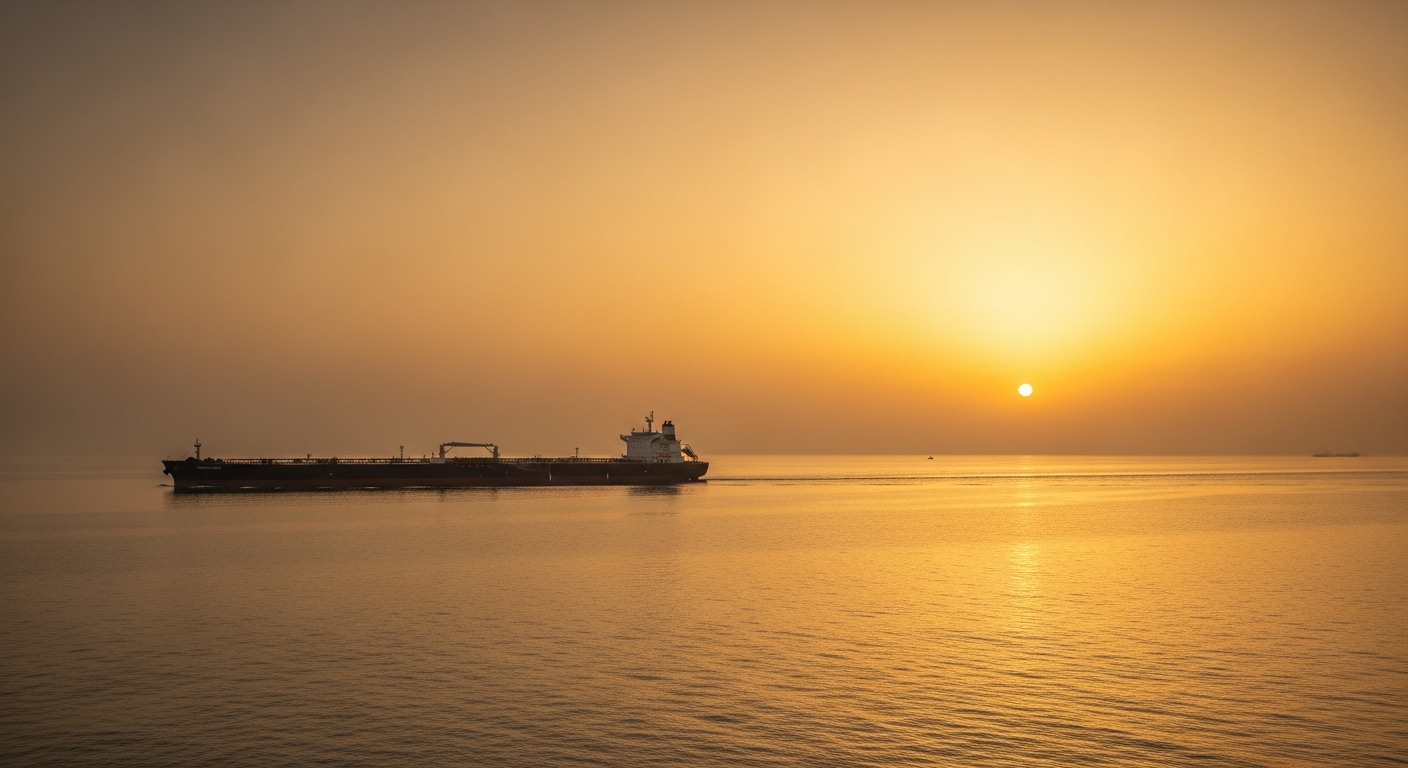
Global oil prices have fallen sharply after the United States and Iran agreed to a two-week ceasefire. The deal also includes the reopening of the Strait of Hormuz, a key waterway for oil shipments.
Market Reaction to the Truce
The news of the ceasefire caused a big reaction in financial markets around the world. The global benchmark for oil prices dropped 15% to just under $92 a barrel. In the US, oil prices fell to about $96 a barrel. This drop was a relief for many countries that depend on oil from the Middle East.
Stock markets also jumped higher. In the US, the S&P 500 index went up 2.5%. The Dow Jones and Nasdaq closed 2.8% higher. Big gains were seen across Europe and Asia too. Germany’s Dax index climbed 4.7%, and Japan’s Nikkei 225 closed up nearly 5.4%.
The Ceasefire Terms and Trump’s Role
The ceasefire was announced by former US President Donald Trump in a social media post. He wrote: “I agree to suspend the bombing and attack of Iran for a period of two weeks.” This was subject to Iran agreeing to the “COMPLETE, IMMEDIATE, and SAFE OPENING of the Strait of Hormuz”. Trump had earlier warned that “a whole civilisation will die tonight” if no deal was reached.
Iranian Foreign Minister Abbas Araghchi said that Tehran would agree to a ceasefire “if attacks against Iran are halted”. He added that safe passage through the Strait of Hormuz “will be possible”.
Why the Strait of Hormuz Matters
The Strait of Hormuz is a narrow sea passage between the Persian Gulf and the Gulf of Oman. It is one of the most important oil shipping routes in the world. The conflict had severely disrupted oil and gas supplies from the Middle East after Iran threatened to attack ships using the strait.
Concerns About the Ceasefire’s Strength
Even though oil prices fell, experts warn that the ceasefire is fragile. There are already reports of attacks continuing in the region. Pakistan’s Prime Minister Shehbaz Sharif said these attacks undermined “the spirit of peace process”. The ceasefire may not last long, and energy production may not fully resume until there is a lasting peace deal.
Long-Term Economic Damage
Even if the ceasefire holds, it could take months for energy production to restart. This is because of the damage done to energy infrastructure in the region. Iran has targeted energy and industrial infrastructure in retaliation for US and Israeli strikes.
In Qatar, the Ras Laffan industrial hub, which produces about a fifth of the world’s liquefied natural gas, has seen its export capacity drop by 17%. It could take up to five years to repair the damage. The total cost of repairs could be more than $25 billion, according to research firm Rystad Energy.
Impact on Asia
Asian countries have been hit hard by the economic fallout. Many of them rely heavily on energy from the Gulf. Governments and companies across the region have announced measures to deal with high energy prices and fuel shortages. Many airlines have raised fares and cut flights because of surging jet fuel prices. Developing countries in Asia have been especially affected because they lack their own refineries or sufficient oil reserves.
A Hopeful Sign
Despite the challenges, the ceasefire is seen as good news, especially for Asian countries. An expert from Japan’s Institute of Energy Economics said, “The ceasefire is good news for Asian countries. If it holds, oil prices will return to normal states, though this will take time”.